 奈良先端科学技術大学院大学
Event & News イベント・ニュース
第23回梅園賞授賞式が開催されました。
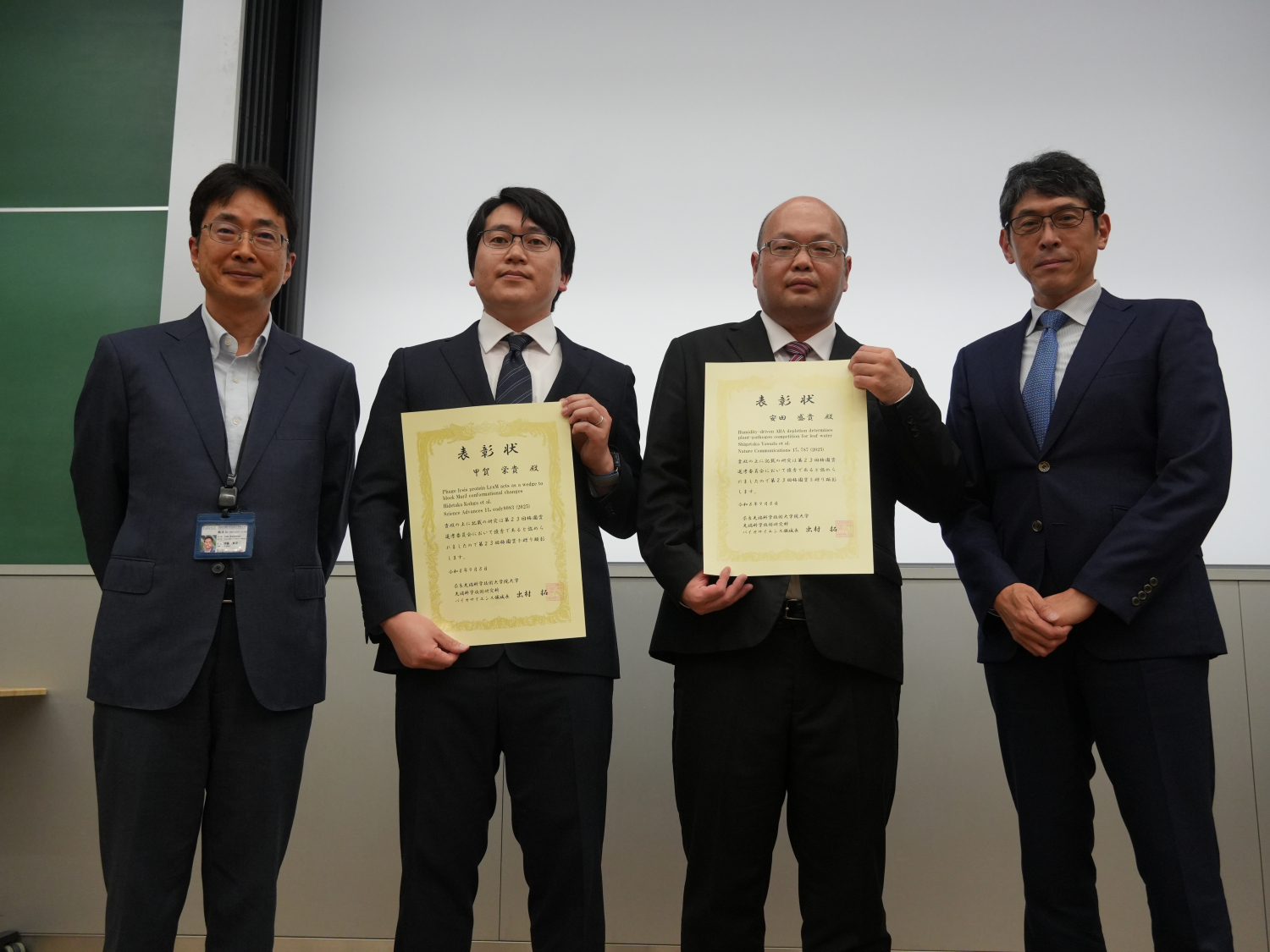
バイオサイエンス領域 植物免疫学研究室の安田盛貴助教と構造生命科学研究室の甲賀栄貴助教のお二方が第23回梅園賞を受賞しました。
9月8日に、バイオサイエンス領域大講義室(L11)にて授賞式と記念講演が行われ、多くの教職員と学生が参加し、受賞者の功績を称えました。
梅園賞は、梅園基金の設立趣旨に沿って、熱気溢れる時期にバイオサイエンス研究に精進し、バイオサイエンス領域において優れた研究成果(論文発表)をあげた本学の助教あるいはポスドク研究員を顕彰するものです。過去において助教あるいはポスドクとして本学に在籍していた方も選考の対象としてします。対象者が研究の推進に中心的な役割を果たしたと認められる発表論文(2024年6月1日〜2026年5月31日の期間に査読付き国際学術誌に発表されたもの)の学術的価値とオリジナリティの高さに審査の重点が置かれています。受賞者には表彰状と副賞が授与されました。
第23回梅園賞受賞者 安田盛貴助教のコメント
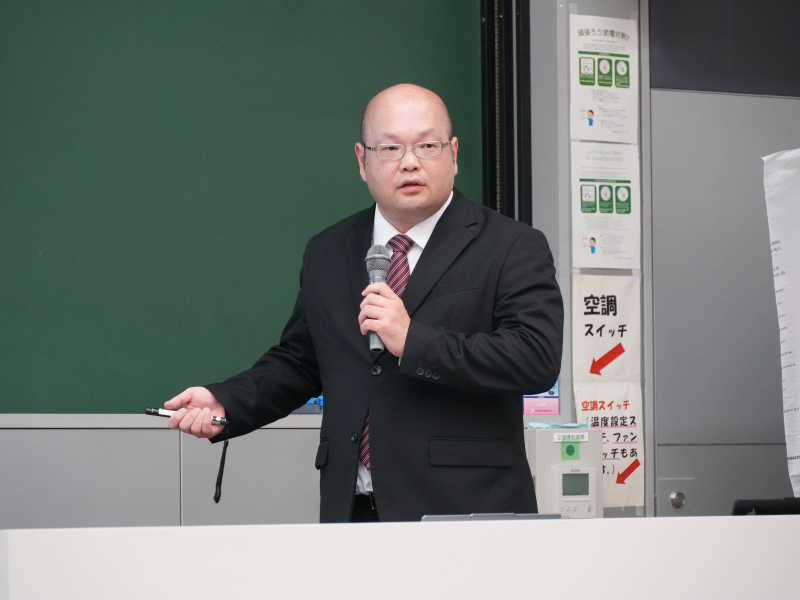
この度は、栄誉ある梅園賞を賜り、誠に光栄に存じます。本研究は、本学に助教として着任後、西條雄介教授をはじめ植物免疫学研究室の皆様、共同研究者の皆様の多大なるご支援のもとで進めることができた成果です。また、本学の充実した共用研究施設・機器を活用することで、研究を円滑に遂行することができました。この場をお借りして、研究を支えてくださったすべての皆様に心より御礼申し上げます。今回の受賞を励みとして、今後も高湿度環境における植物と微生物の相互作用に関する研究をさらに発展させるべく、一層精進してまいります。
安田盛貴助教の受賞研究の発表内容(演題と要旨)
高湿度環境における葉内の水をめぐる植物と病原細菌の攻防の分子基盤
Molecular basis of plant–bacterial competition for leaf water under high humidity
Abstract:
High humidity promotes bacterial diseases in plants by facilitating water accumulation in the leaf apoplast, a phenomenon known as water-soaking. Bacterial pathogens induce water-soaking through the action of type III effectors (T3Es), thereby establishing an aqueous environment that supports their proliferation. However, how plants perceive high humidity and counteract pathogen-induced water-soaking has remained largely unknown. Here, we show that high humidity activates a plant defense mechanism that restricts water accumulation within leaves. In Arabidopsis thaliana, high humidity rapidly induces the expression of the abscisic acid (ABA) catabolic enzyme CYP707A3 through a signaling pathway involving the calcium-permeable channels CNGC2, CNGC4, and CNGC9 and the transcription factor CAMTA3. CYP707A3-mediated ABA depletion promotes stomatal opening, reduces leaf water retention, and suppresses water-soaking and bacterial growth. Conversely, the bacterial pathogen Pseudomonas syringae pv. tomato DC3000 counteracts this defense by deploying T3Es, particularly AvrPtoB, to suppress humidity-induced CYP707A3 expression and maintain elevated ABA levels. These findings reveal that plants and bacterial pathogens compete for control of leaf water through opposing regulation of ABA metabolism. This study provides a molecular framework for understanding humidity-dependent plant–bacterial interactions and may contribute to the development of disease-control strategies under increasingly warm and humid climatic conditions.
第23回梅園賞受賞者 甲賀栄貴助教のコメント
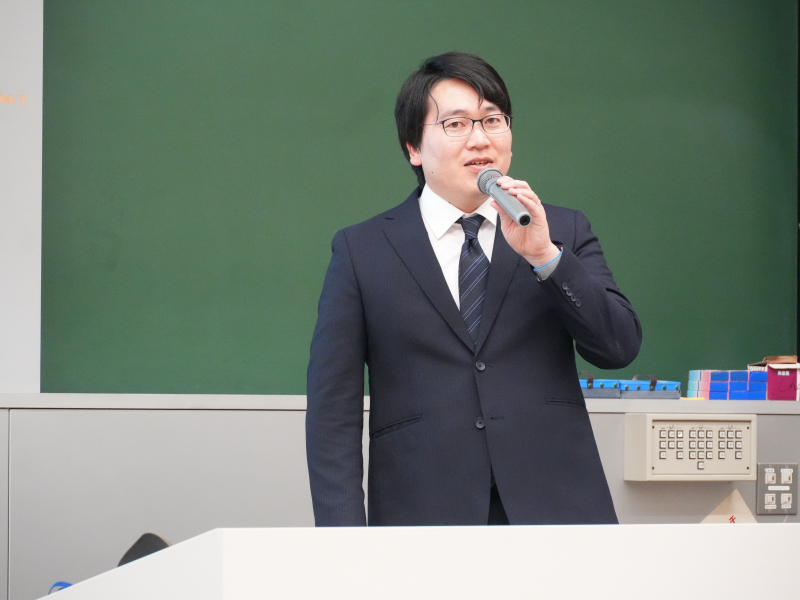
この度は、梅園賞を賜り、大変光栄に存じます。受賞対象となった研究は、私が奈良先端科学技術大学院大学にポスドクとして着任した当初から取り組んできたものです。研究を進めるにあたり、常に有意義な議論とご指導をいただいた塚崎智也教授、実験や解析に尽力してくれた学生の皆さん、ならびに多大なご支援をいただいた共同研究者の先生方に、心より御礼申し上げます。多くの試行錯誤を経て本研究を論文として結実させることができ、今回このような形で評価いただけたことを大変うれしく思います。本賞を励みとして、研究をさらに発展させてまいります。
甲賀栄貴助教の受賞研究の発表内容(演題と要旨)
クライオ電顕から見えてきたファージ溶菌タンパク質による細菌膜タンパク質MurJの阻害機構
Cryo-EM reveals how phage lysis proteins inhibit the bacterial membrane protein MurJ
Abstract:
Many antibiotics inhibit essential bacterial processes; however, the continued emergence of multidrug-resistant bacteria highlights the need for antibacterial agents with new mechanisms of action. MurJ is an essential membrane protein that flips lipid II across the cytoplasmic membrane during peptidoglycan biosynthesis in Escherichia coli. The 37-residue single-gene lysis protein LysM, encoded by bacteriophage M, targets MurJ and induces host cell lysis, but its molecular mechanism has remained unclear.
Here, we determined the cryo-electron microscopy structure of the MurJ–LysM complex at 3.09 Å resolution. The structure revealed that LysM binds to the cleft between transmembrane helices 2 and 7 of MurJ and acts as a molecular wedge, locking MurJ in an outward-facing conformation. Alanine-scanning mutagenesis and pull-down assays identified key residues required for LysM function and its interaction with MurJ. Furthermore, molecular dynamics simulations demonstrated that LysM stabilizes the outward-facing state of MurJ.
These findings reveal a previously unrecognized phage-derived mechanism for inhibiting lipid II transport and provide a structural framework for the development of antimicrobial agents targeting MurJ.
(2026年09月15日掲載)
この記事をシェア 