

Events & News
The 23rd Umesono Prize Ceremony
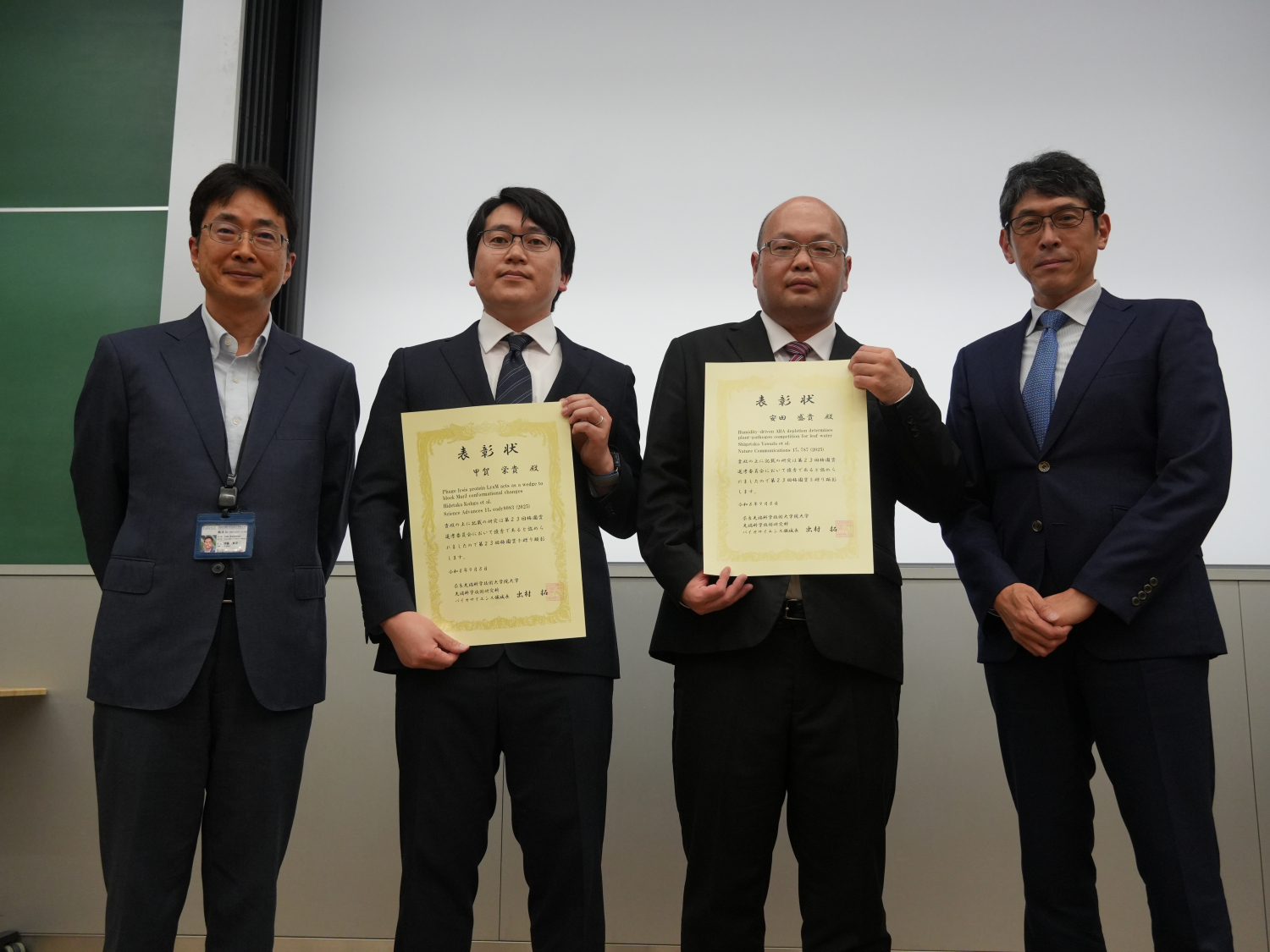
Assistant Professor Shigetaka Yasuda (Laboratory of Plant Immunity) and Hidetaka Kohga (Laboratory of Structural Life Science) received the 23rd Umesono Prize. The 23rd Umesono Prize Ceremony was held on September 8, 2026, at the Biological Science Seminar Hall (L11), with many faculty members and students in attendance to honor the prize recipients.
The Umesono Prize has been awarded annually since 2004 to young researchers in Graduate School (Division) of Biological Sciences at NAIST who have made significant contributions to the biological sciences during their time at the institute. The prize is awarded to young researchers with a bright future to follow in the footsteps of Dr. Umesono who enriched us with his personal and intellectual generosity. His spirit continues to inspire us and light our way. The award is primarily based on the originality and academic value of a paper which the awardee wrote as a first author.
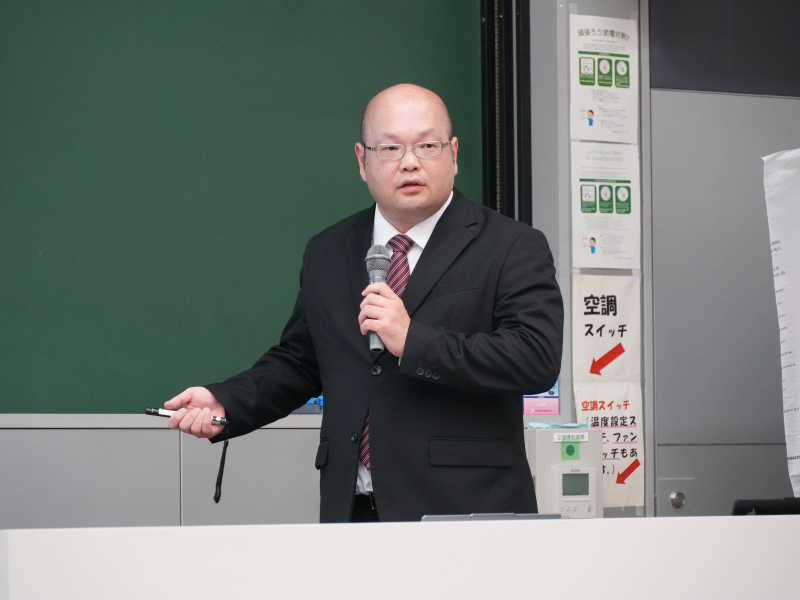
Assistant Professor Shigetaka Yasuda
Research Title
Molecular basis of plant–bacterial competition for leaf water under high humidity
Abstract:
High humidity promotes bacterial diseases in plants by facilitating water accumulation in the leaf apoplast, a phenomenon known as water-soaking. Bacterial pathogens induce water-soaking through the action of type III effectors (T3Es), thereby establishing an aqueous environment that supports their proliferation. However, how plants perceive high humidity and counteract pathogen-induced water-soaking has remained largely unknown. Here, we show that high humidity activates a plant defense mechanism that restricts water accumulation within leaves. In Arabidopsis thaliana, high humidity rapidly induces the expression of the abscisic acid (ABA) catabolic enzyme CYP707A3 through a signaling pathway involving the calcium-permeable channels CNGC2, CNGC4, and CNGC9 and the transcription factor CAMTA3. CYP707A3-mediated ABA depletion promotes stomatal opening, reduces leaf water retention, and suppresses water-soaking and bacterial growth. Conversely, the bacterial pathogen Pseudomonas syringae pv. tomato DC3000 counteracts this defense by deploying T3Es, particularly AvrPtoB, to suppress humidity-induced CYP707A3 expression and maintain elevated ABA levels. These findings reveal that plants and bacterial pathogens compete for control of leaf water through opposing regulation of ABA metabolism. This study provides a molecular framework for understanding humidity-dependent plant–bacterial interactions and may contribute to the development of disease-control strategies under increasingly warm and humid climatic conditions.
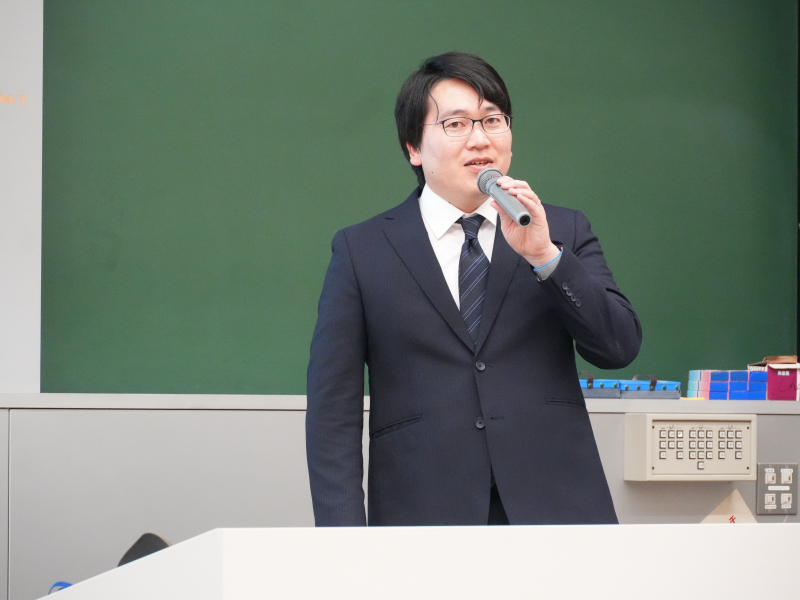
Assistant Professor Hidetaka Kohga
Research Title
Cryo-EM reveals how phage lysis proteins inhibit the bacterial membrane protein MurJ
Abstract:
Many antibiotics inhibit essential bacterial processes; however, the continued emergence of multidrug-resistant bacteria highlights the need for antibacterial agents with new mechanisms of action. MurJ is an essential membrane protein that flips lipid II across the cytoplasmic membrane during peptidoglycan biosynthesis in Escherichia coli. The 37-residue single-gene lysis protein LysM, encoded by bacteriophage M, targets MurJ and induces host cell lysis, but its molecular mechanism has remained unclear.
Here, we determined the cryo-electron microscopy structure of the MurJ–LysM complex at 3.09 Å resolution. The structure revealed that LysM binds to the cleft between transmembrane helices 2 and 7 of MurJ and acts as a molecular wedge, locking MurJ in an outward-facing conformation. Alanine-scanning mutagenesis and pull-down assays identified key residues required for LysM function and its interaction with MurJ. Furthermore, molecular dynamics simulations demonstrated that LysM stabilizes the outward-facing state of MurJ.
These findings reveal a previously unrecognized phage-derived mechanism for inhibiting lipid II transport and provide a structural framework for the development of antimicrobial agents targeting MurJ.
(September 15, 2026)
